Project Overview
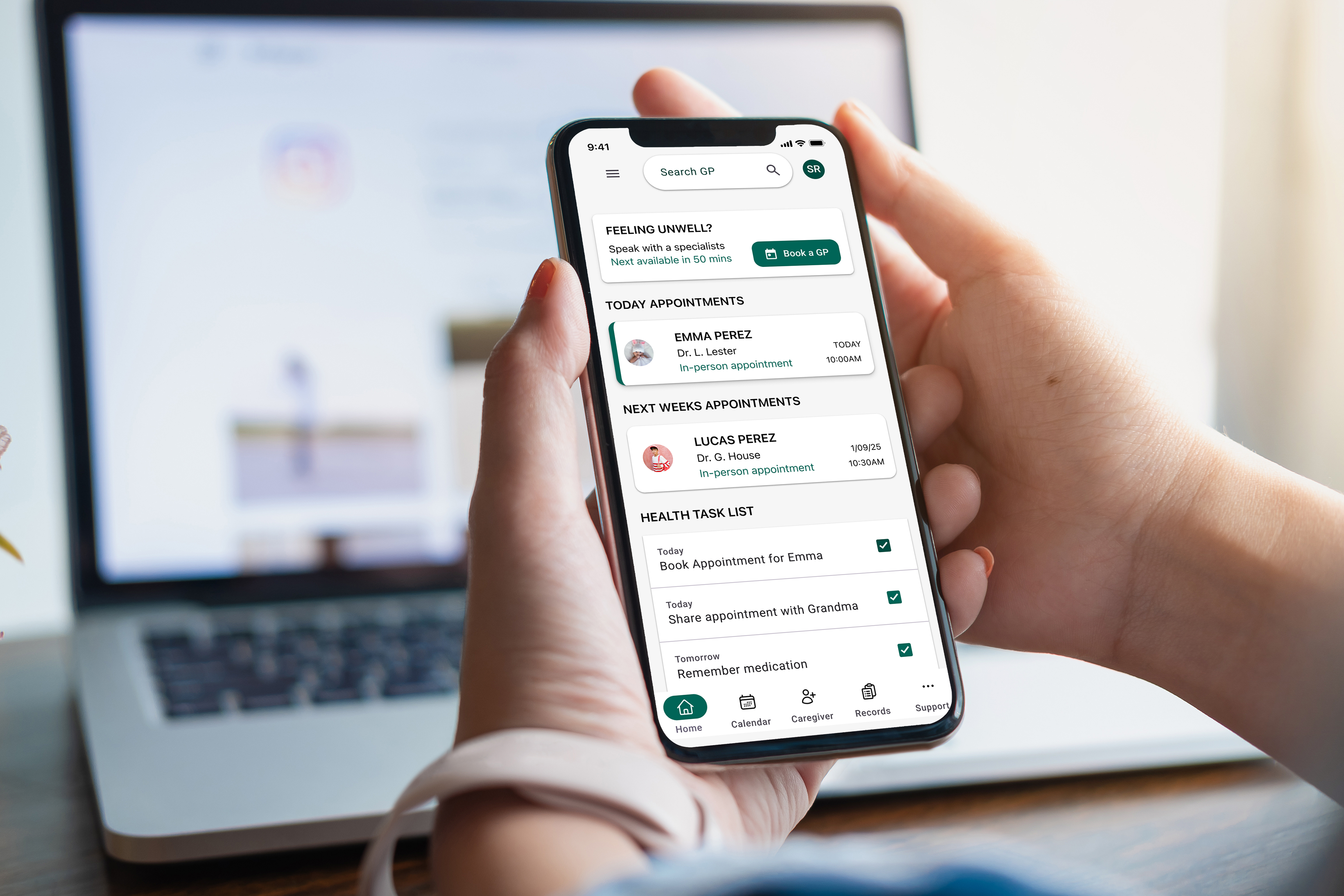
CareWell is a mobile app designed to help busy families easily book, track, and share children’s healthcare appointments. The goal was to create a calmer, clearer experience than existing GP systems, empowering parents with quick access to essential health information while supporting shared caregiving.
Role: Product Designer (UX/UI)
Timeline: 30 weeks
Tools: Figma, FigJam, Zoom, Google Forms
The Problem
Parents often struggle to manage medical appointments due to:
• Hidden or complex booking systems
• Overwhelming dashboards
• Confusing calendar structures
• Difficulty coordinating with caregivers
• Lack of emotional reassurance during stressful health moments
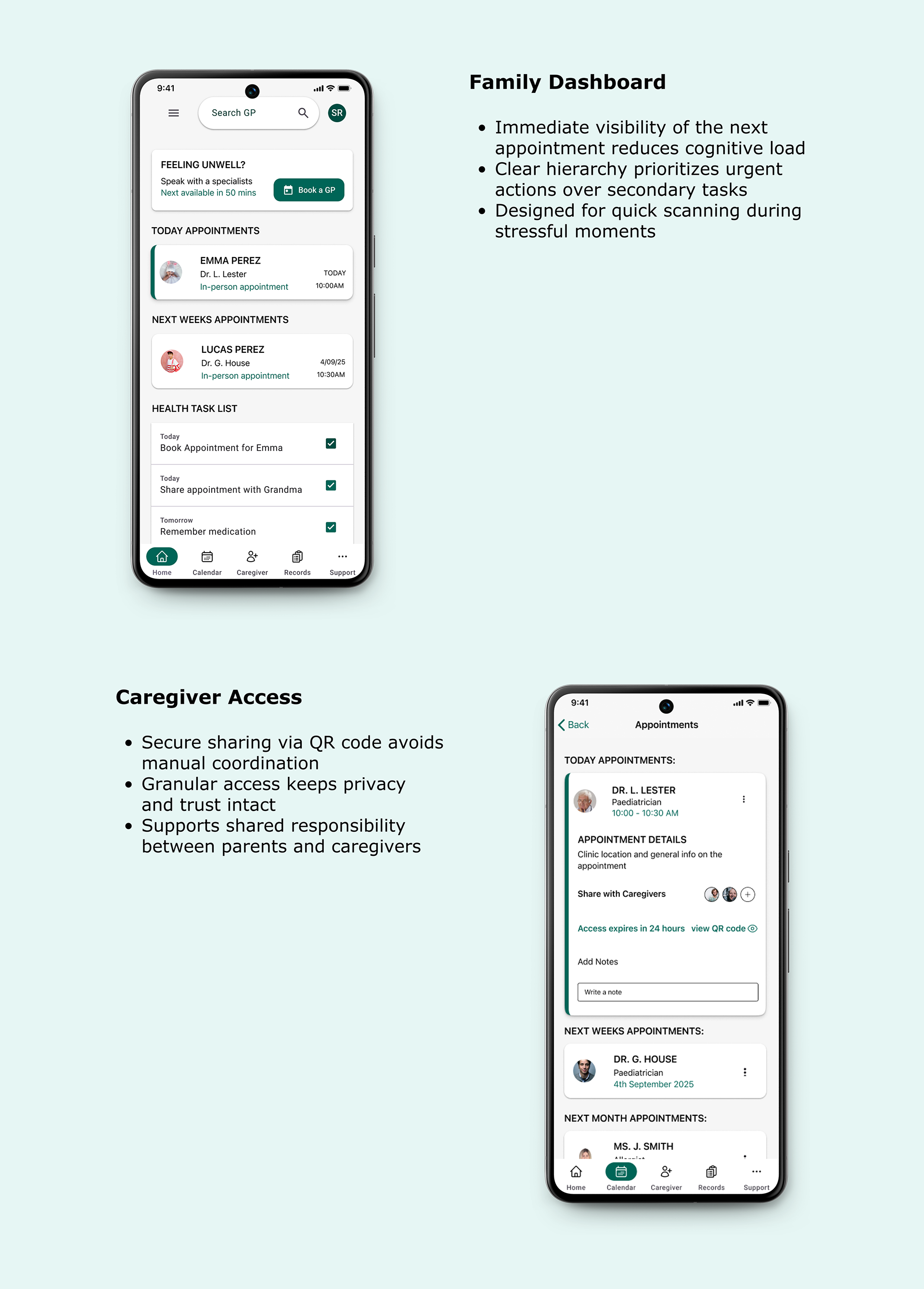
Design Solution at a Glance
CareWell simplifies family healthcare by combining booking, tracking, and caregiver-sharing into a single, intuitive experience. The redesigned flow focuses on clarity, emotional engagement, and enhanced usability across both mobile and desktop platforms.
• Centralised family dashboard: one place to see upcoming appointments, tasks, and caregivers
• Prominent booking CTA: reduced missed bookings and decision time
• Clear caregiver sharing flow: confirmations remove uncertainty
• Calm, MD3-based UI: reduces stress during healthcare tasks
Understanding Families’ Needs
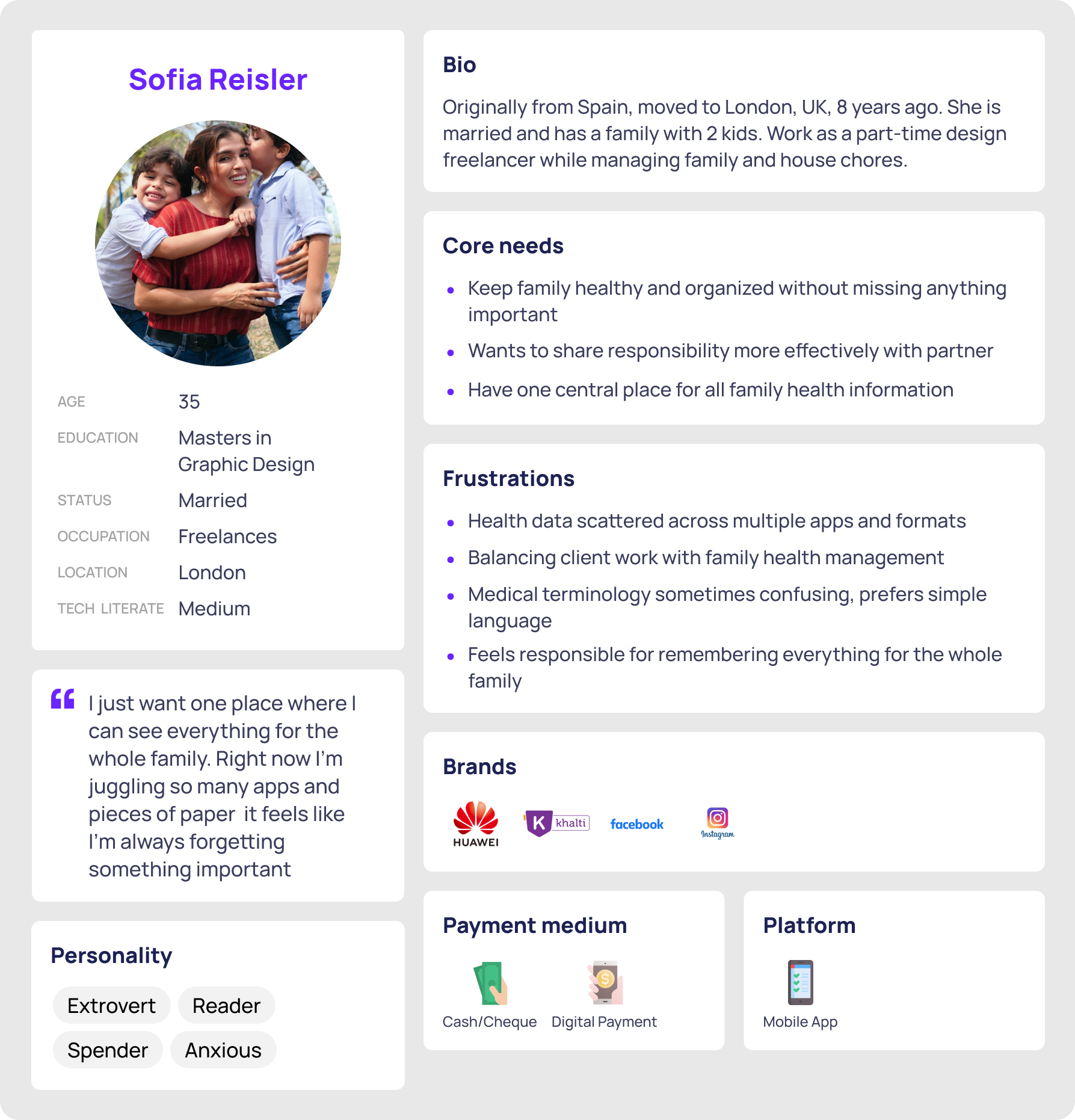
I conducted interviews and usability tests with 5 parents and caregivers (ages 30–45). Participants described feeling overwhelmed by healthcare admin and wanted:
• Immediate clarity about what’s coming up
• A fast way to book urgent appointments
• Easy sharing with caregivers
• A clean, calm interface
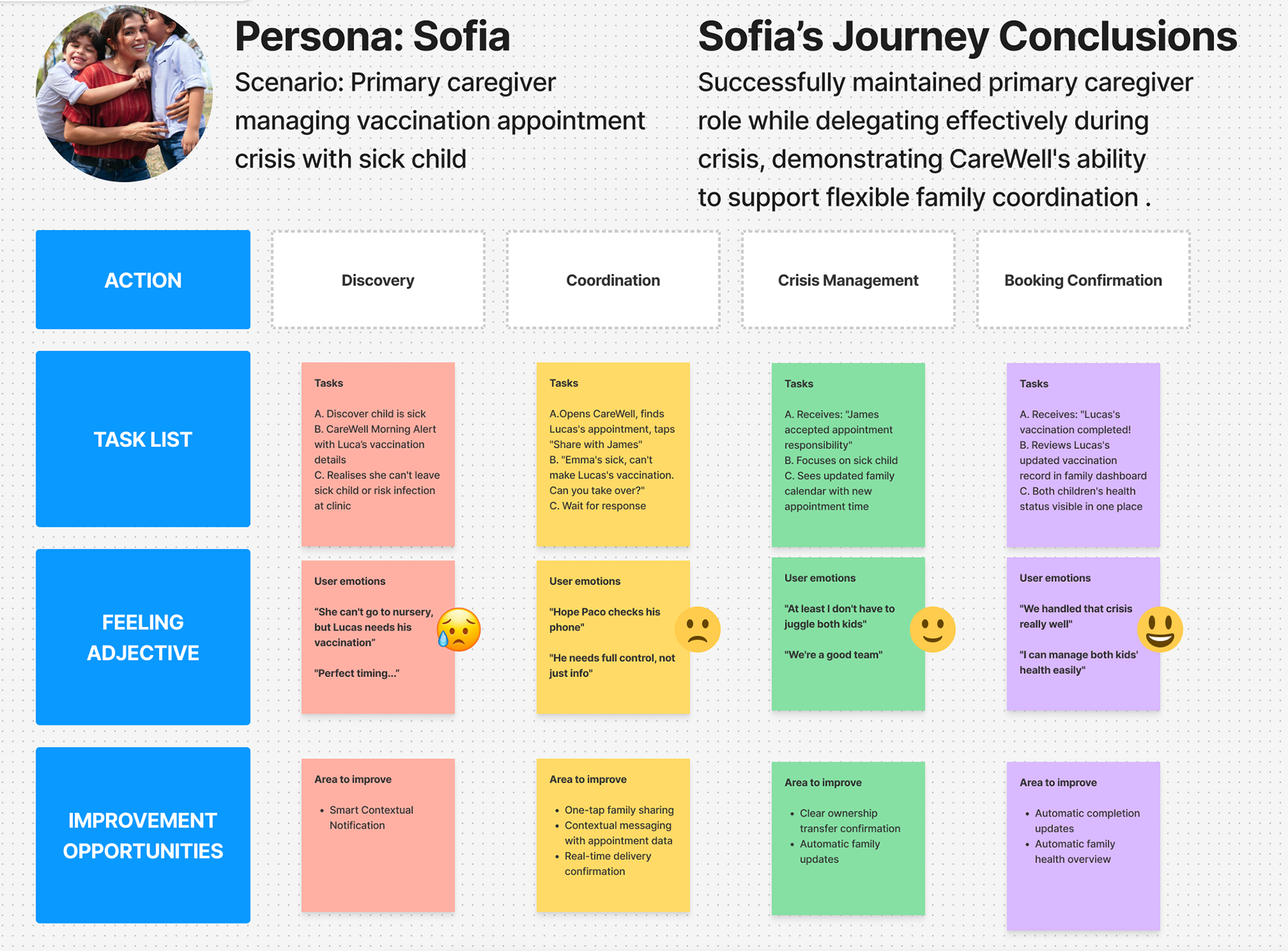
Key Findings
• Users want clear visibility of the week ahead without scrolling
• The booking button must be instantly visible; hidden CTAs caused frequent confusion
• The caregiver flow was unclear, leading users to question whether they had completed the action
• The distinction between “Upcoming” vs “Future” appointments was confusing
• Emotional reassurance (calming language, clear confirmation) is important during stressful health tasks
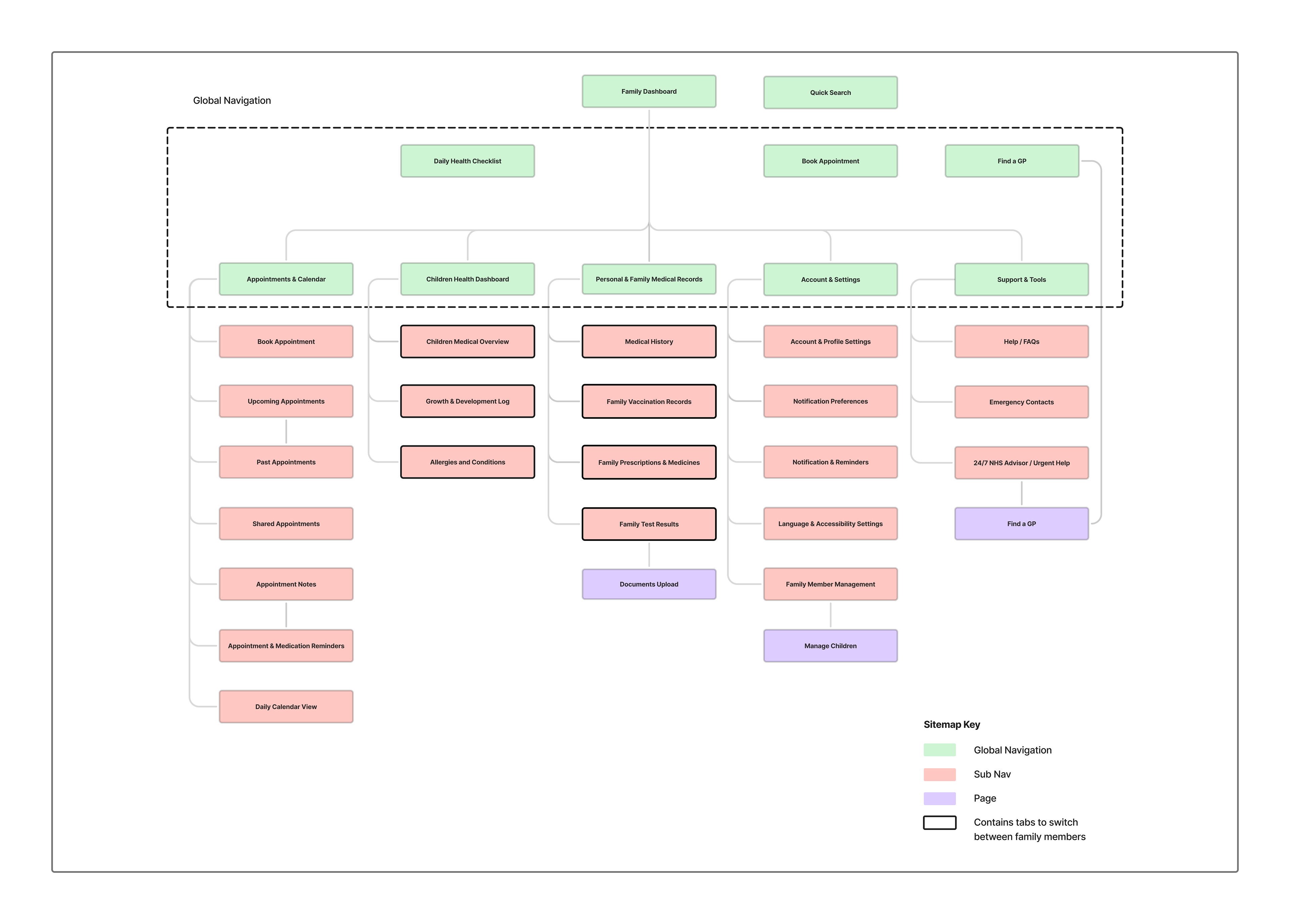
Simplified Sitemap and navigation
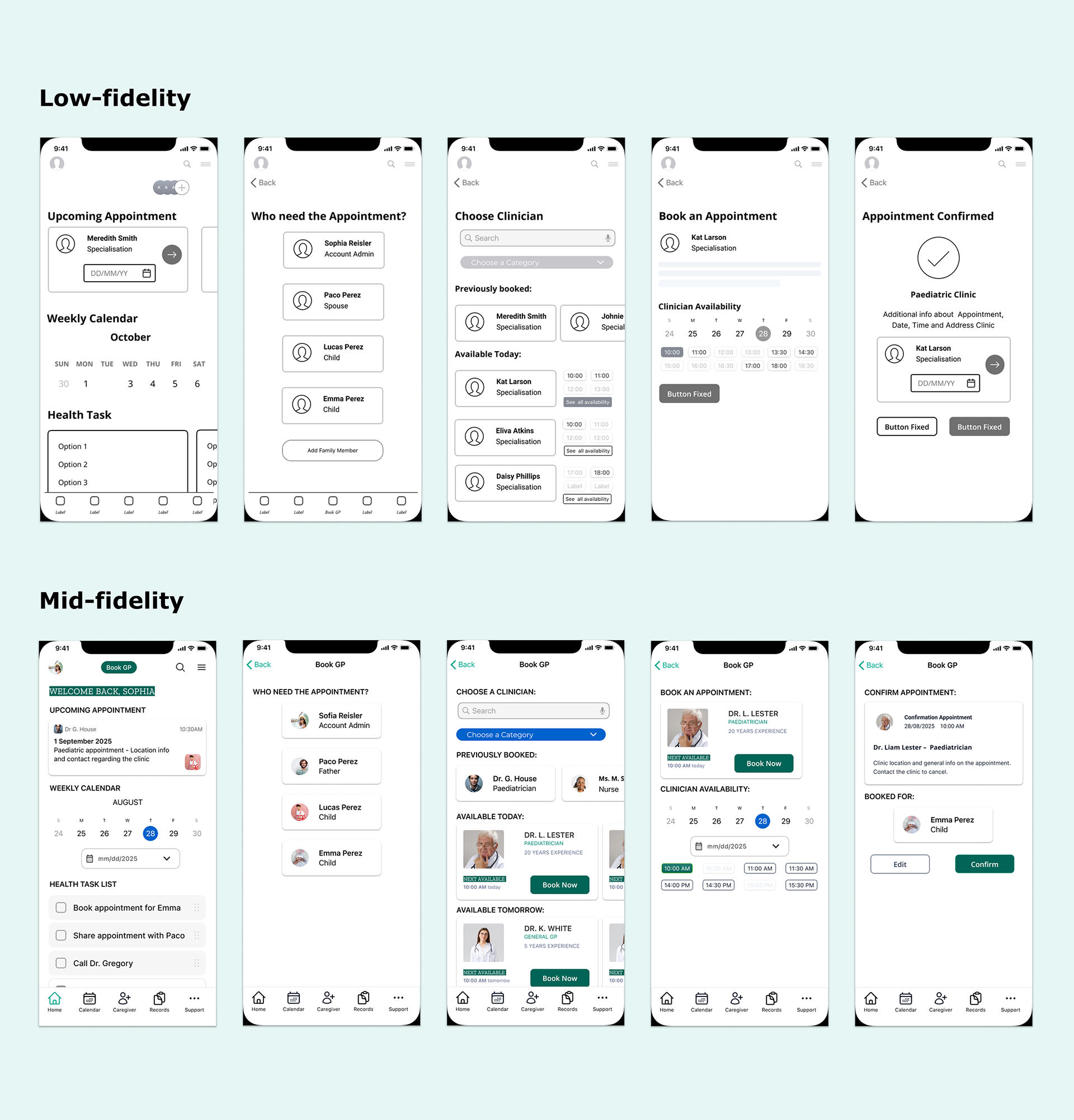
First Findings
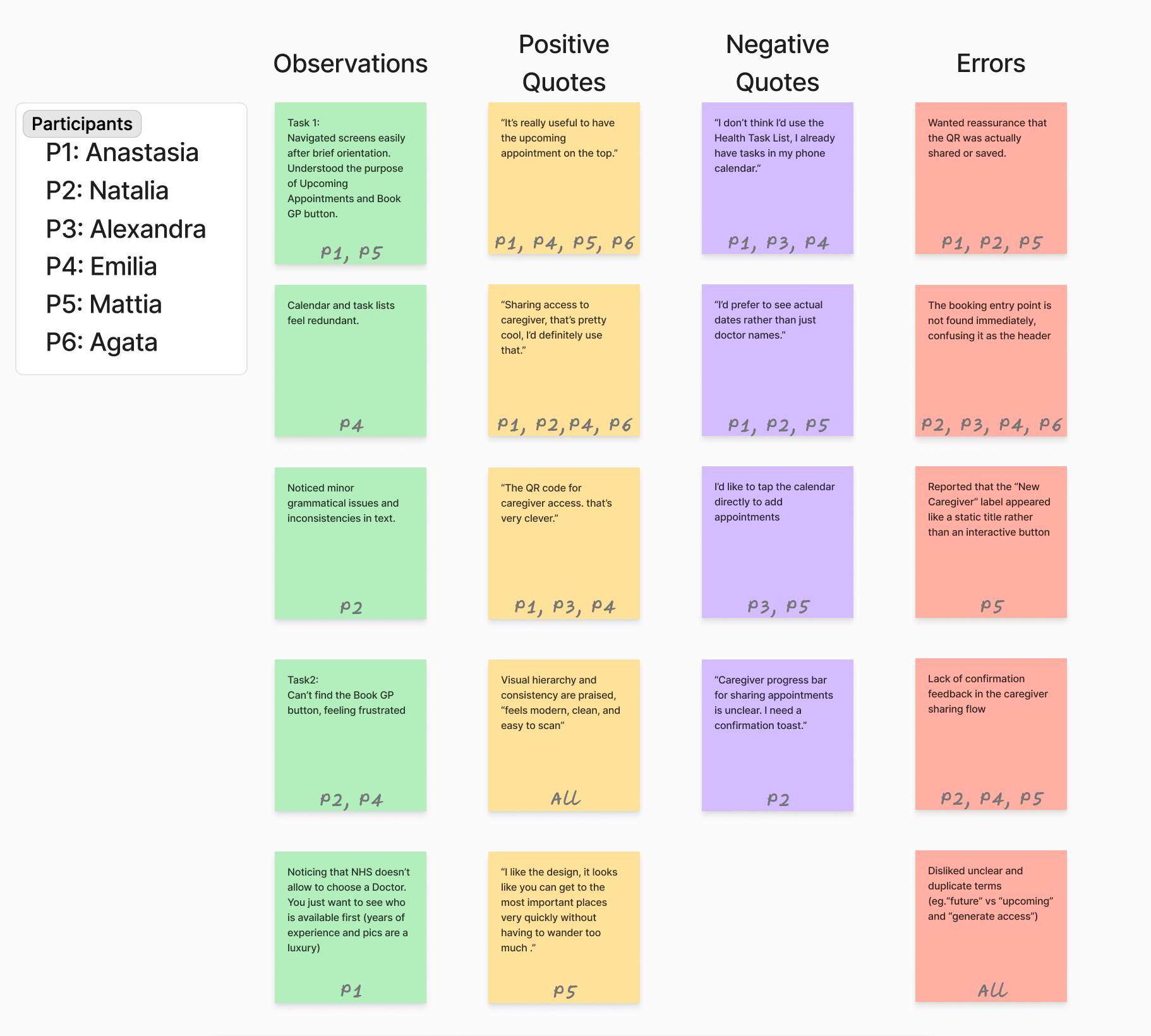
• Booking CTA was ignored by 70% of participants
• Users are expected to tap directly on the calendar to add an appointment
• Caregiver confirmation lacked clarity
• “Upcoming vs Future” labels caused confusion
Changes Made
• Simplified dashboard structure
• Moved booking CTA to a more intuitive location
• Added clearer appointment hierarchy
• Refined caregiver UI
Turning User Feedback into Product Direction
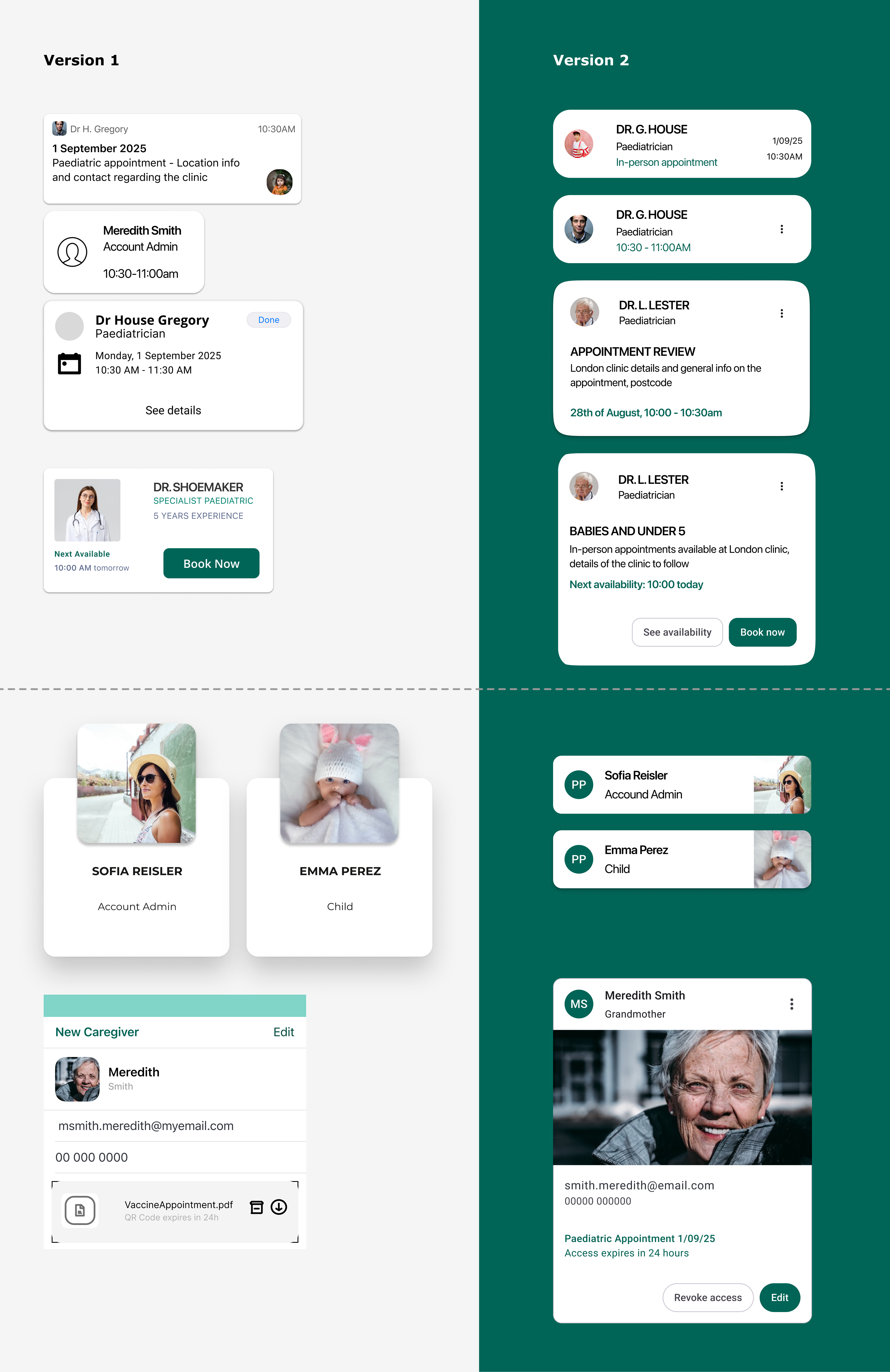
Material Design Key Components Upgrade
• Replaced deprecated segmented buttons
• Updated booking card using MD list + supporting visuals
• Improved calendar navigation using MD tabs and chips
• Adopted MD3 elevations, spacing, and rounded corners
A More Logical, User-Friendly Path
The updated flow reduces cognitive load and makes booking clearer and faster.
Improvements:
• Booking CTA is now consistent and visible
• Appointment cards follow MD guidelines
• Caregiver flow includes confirmation steps
• Visual grouping improves scannability
• Reduced redundant steps
5 Moderated Usability Tests with Parents: Key Metrics
• Success Rate: 100% (after small prompt)
• Time on Task: improved by 45% after CTA redesign
• Error Rate: dropped significantly in caregiver flow
Guided flow that reduces decision fatigue
Impact
• Booking CTA visibility improved from 0% → 100% after redesign
• Caregiver flow confusion reduced by 80%
• Dashboard scanning time has been reduced significantly
• Emotional clarity improved user confidence
Next Step
• Accessibility testing with assistive technologies
• Quantitative validation (NPS, satisfaction scores)
• Expand caregiver permissions and reminders
Test the prototype
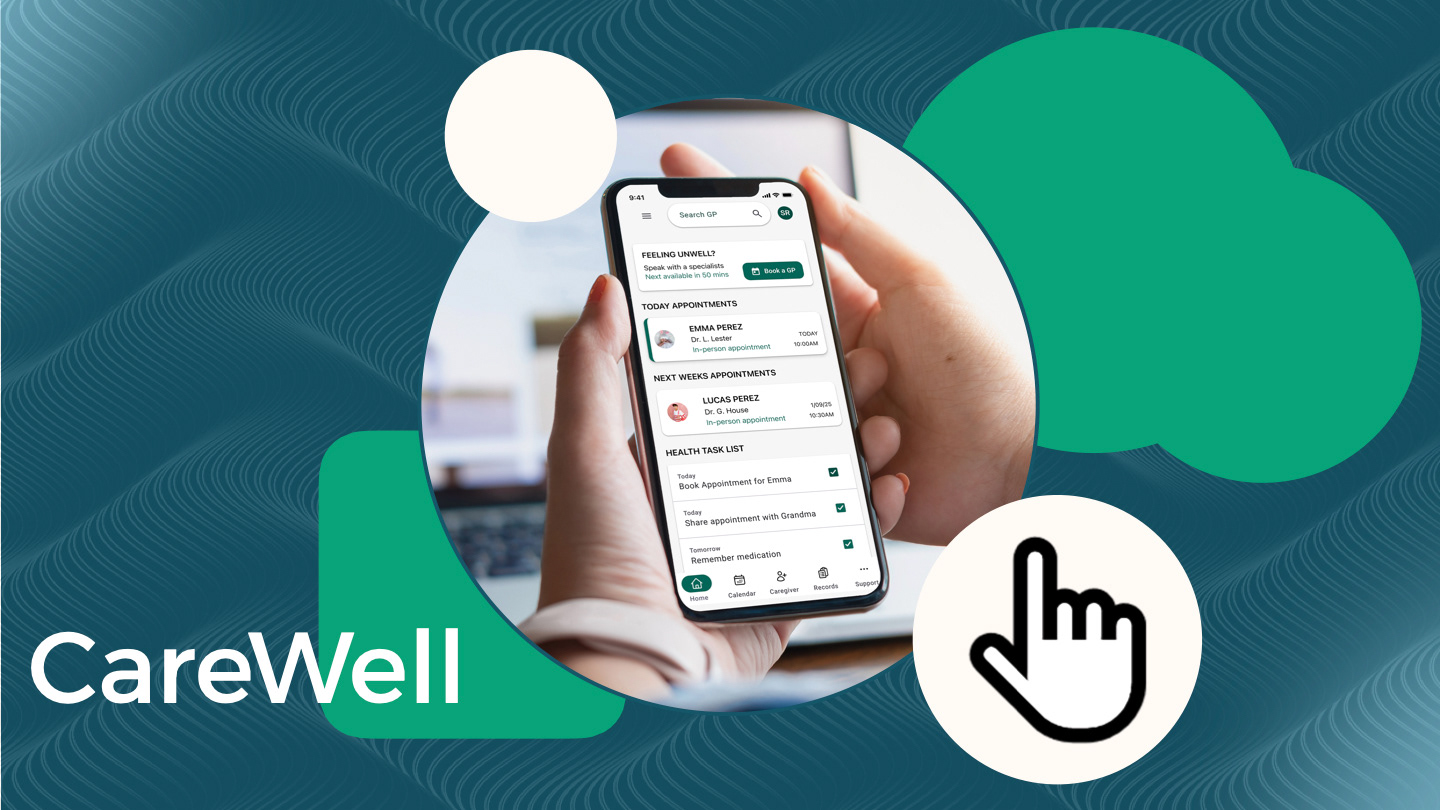
30 Days After Launch
If CareWell launched, my focus during the first month would shift from usability testing to validating behaviour at scale. I'd work with Product and Engineering to instrument key events across the booking and caregiver journeys, measuring booking completion, time to book, drop-off rates, caregiver invitation acceptance, and post-booking confidence.
Alongside analytics, I'd review support tickets and interview early users to understand why people behaved the way they did. That combination of quantitative and qualitative evidence would help prioritise the next iteration based on real usage rather than assumptions.
Final Thought
CareWell demonstrates how thoughtful UX and emotional design can meaningfully reduce friction in everyday healthcare management for families.